

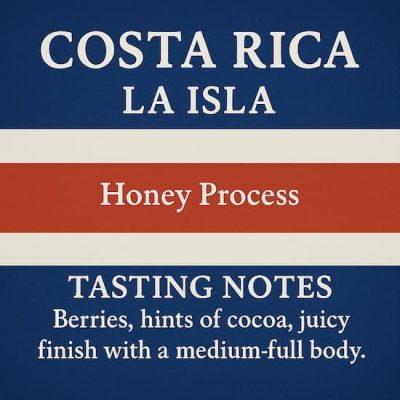
Costa Rica
Coffee arrived in Costa Rica in the late 1700s, most likely brought from Cuba. Farmers quickly saw that the volcanic soils and high mountains offered ideal conditions for coffee. By the mid‑1800s, coffee had become the country’s most important export. Because of this long history, coffee shaped both the economy and the identity of Costa Rica.
Today, Costa Rica produces only Arabica, and the government maintains this requirement to protect quality. As a result, the country developed an approach centred on careful cultivation and controlled processing. Genetic diversity remains strong, with Bourbon‑type cultivars such as Caturra, Catuai and Villa Sarchí commonly planted.
The country’s volcanic soils, clear wet‑and‑dry seasons, and high elevations contribute to clean cups with pronounced sweetness and balanced acidity. Farming culture here focuses on microlots and careful picking. Therefore, Costa Rica often showcases traceable lots with distinct clarity and strong expression of variety and place.
West Valley of Costa Rica
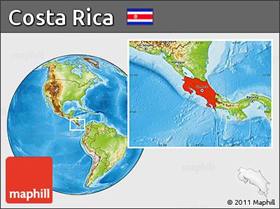
The West Valley lies northwest of San José and includes areas such as Naranjo, Grecia and Palmares. Elevation ranges from roughly 1,300 to 1,700 metres. This altitude keeps temperatures moderate and slows cherry maturation, increasing both sweetness and bean density.
The region benefits from rich volcanic soils and a well‑defined dry season. Consequently, cherries ripen evenly and growers can manage extended drying with consistency. Microclimates vary from farm to farm, which creates diversity in flavour. Although profiles differ, West Valley coffees often show bright acidity, smooth body and notes ranging from citrus to honeyed sweetness.
Furthermore, smallholder farmers and family‑run micromills dominate the region. Their focus on selective picking, controlled processing and environmental stewardship shapes the clarity and balance that West Valley coffees are known for.
La Isla
La Isla is a family‑run farm in Naranjo, in the heart of the West Valley. The farm sits at about 1,560 metres and specialises in honey‑processed microlots. The Jiménez and Padilla family handpick cherries at peak ripeness and keep lots separated by variety. Villa Sarchí is a dwarf mutation of Bourbon widely grown in this region for its ability to thrive at high altitude and deliver clean, expressive cups.
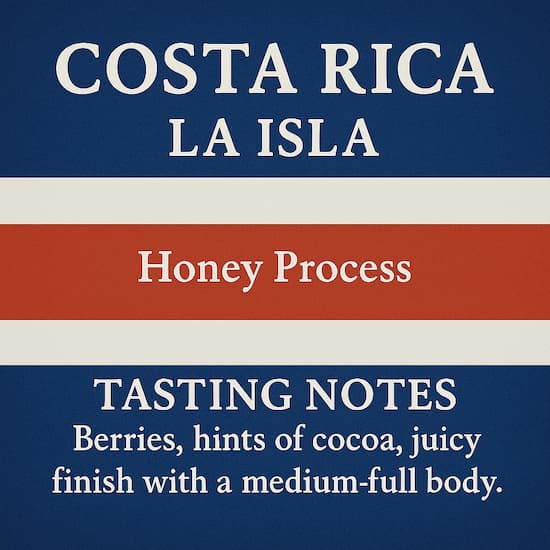
During honey processing, the farm de‑pulps the cherries and dries them with mucilage intact. Because of this, the cup tends to show heightened sweetness and a rounder body. In this lot, expect bright pomegranate, stone fruit and a soft chocolate sweetness.
A light to medium roast suits this coffee well. It preserves the varietal clarity, keeps the fruit tones bright, and maintains the silky structure created by the honey process.
La Isla Villa Sarchí Details
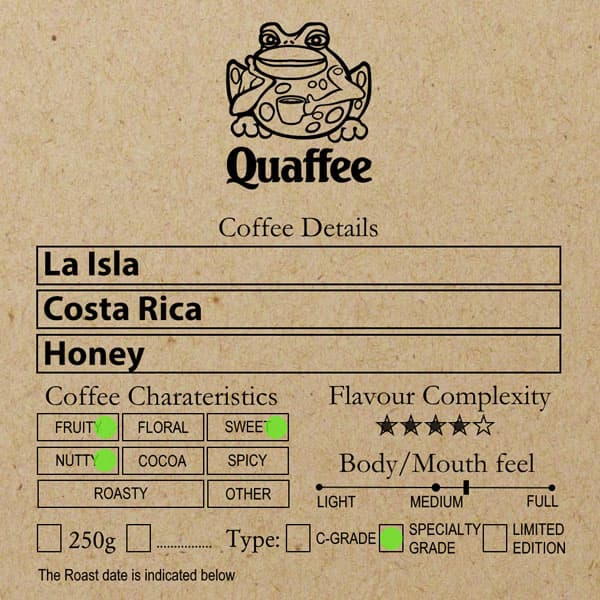
Details of this Honey processed coffee are:
| Region | West Valley, Costa Rica |
| Farmers | Jiménez & Padilla family |
| Cultivars | Arabica (Villa Sarchí) |
| Altitude | ~1,560 m |
| Processing | Honey process, dried on raised beds |
| Packaging | Vaccuum packed and in a box. |
| Characteristics | Berries, hints of cocoa juicy finish |
| Profile used | Slowly introduct heat until max, then decrease into browning and across first crack. |
| Roast Degree | Light |
Our brews:
| Brew Method | Ratio | Brew Method | Ratio | |
|---|---|---|---|---|
| Espresso | 1:2.1 (25 sec) | AeroPress | 16.5g:200g (finer) | |
| Plunger | 48g:800g | Pour over/filter | 18g:300g (45 sec bloom, 3.5 total brewing time) |
Transparency Information
| Producer / Organisation | La Isla via. Cedar Coffee Roasters |
|---|---|
| FOB price | $15.00 (est) |
| Cupping score | 84 (ours) |
| Lot size bought | 1 x 30 kg bag. |
| Relationship | We have been purchasing coffee with Cedar for 4 years. |
Source
- Café Milagro — Background on Costa Rica’s coffee history, national farming culture, and early development of the industry.
- Café de Costa Rica – Valle Occidental — Information on the West Valley’s geography, climate, soils and common flavour characteristics.
- Cedar Info — Details on La Isla’s altitude, Villa Sarchí cultivar, honey processing steps and flavour profile.
- La Isla website — Background on La Isla’s family ownership, cultivation practices and farm history.


Reviews
There are no reviews yet.