

Meraki
Meraki is a coffee equipment brand built by engineers and coffee enthusiasts. The company started in Shenzhen, China, where the founding team focused on solving a common problem: making quality espresso easier to produce at home without relying on complex equipment.
The name “Meraki” comes from Greek. It refers to doing something with care, attention, and a sense of craft. That idea shapes how the company approaches design. Their machines aim to balance technical performance with straightforward use.
Meraki develops its products across a wider base, with offices in Hong Kong, the UK, and the US. The team works with coffee roasters in different regions to stay close to how coffee is actually used and tasted.
The focus stays on practical engineering. Instead of pushing for complexity, Meraki builds machines that reduce the number of steps between grinding and extraction. The goal is consistent espresso without needing specialist training.
Meraki Espresso Machine
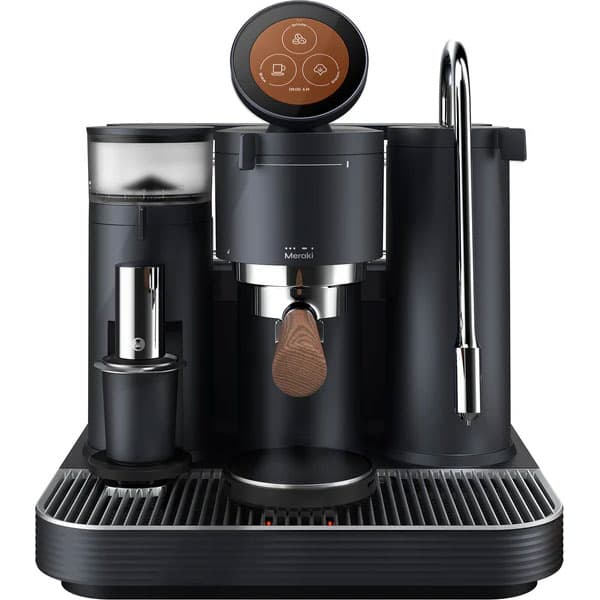
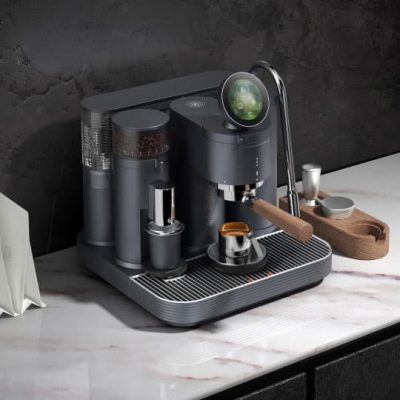
he Meraki Espresso Machine is an all-in-one system built around weight-based espresso.
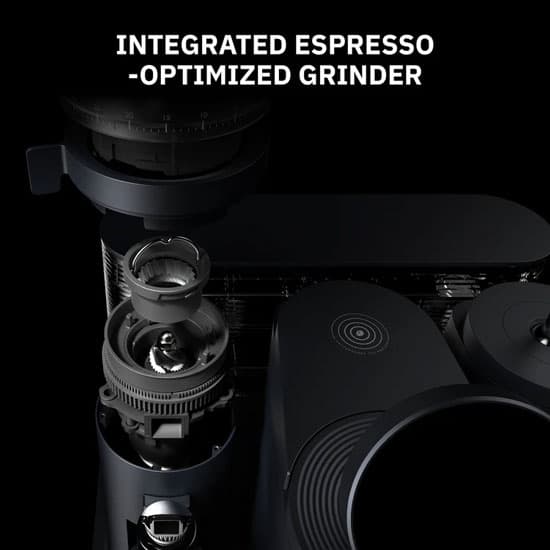
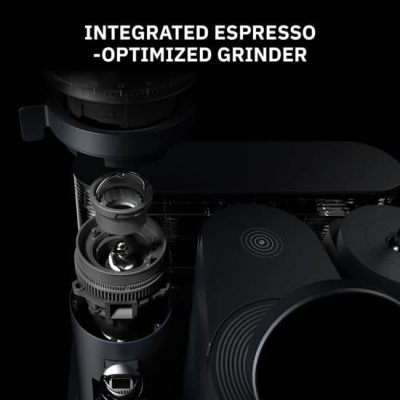
It uses a grinder co-developed with Timemore, fitted with conical burrs designed for espresso consistency. Grind size is stepless, so you can still adjust properly, but the machine handles dosing by weight.
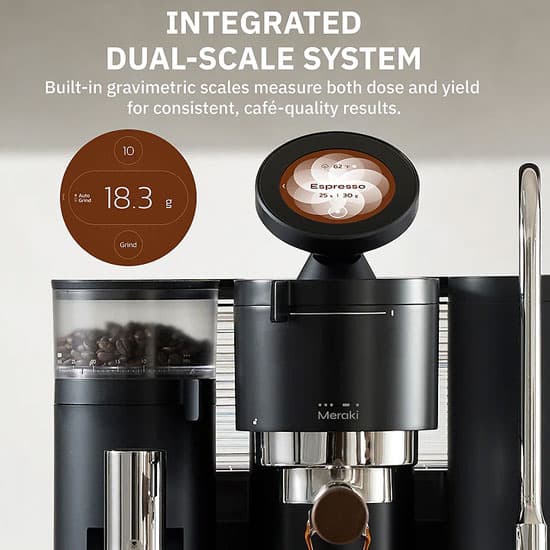
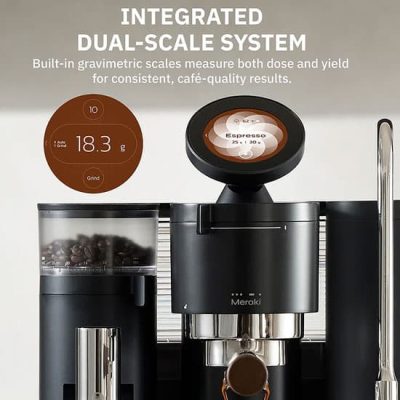
There are two integrated scales. One sits under the grinder and measures your dose as it grinds. The other sits under the cup and measures your yield during extraction. This allows grind-by-weight and stop-by-weight in the same workflow.
In practice, this means you set a recipe once, and the machine repeats it. It removes the need for a separate scale or manual timing.
Compact Footprint Espresso Machine
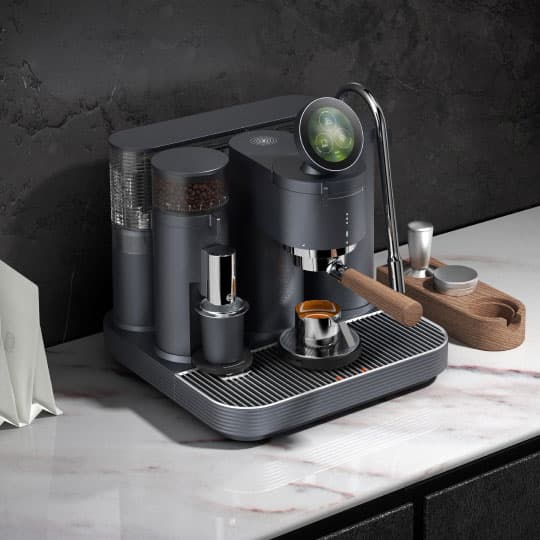
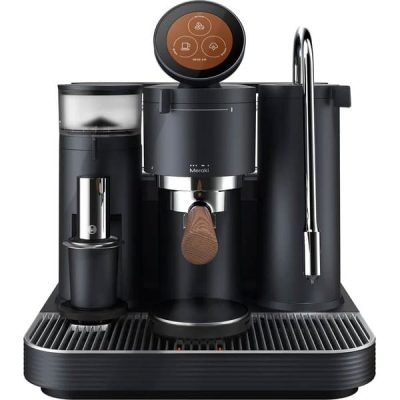
This is a single footprint machine, but it behaves more like a full espresso setup.
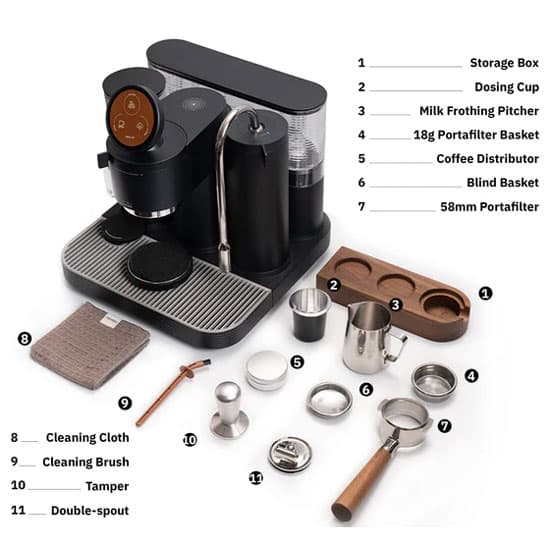
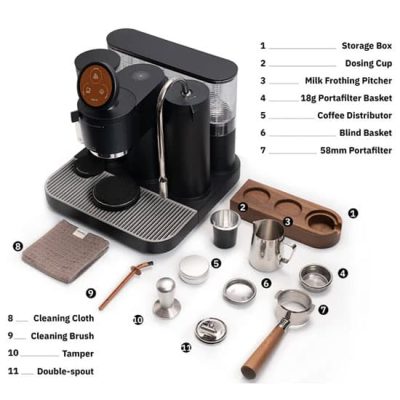
You still have a proper portafilter workflow. You grind into a dosing cup, transfer, tamp, and extract. The difference is that the measuring happens inside the machine.
The integrated grinder, built with Timemore, replaces a separate espresso grinder. At the same time, the dual scales replace both dosing and brew scales.
This matters because most workflow issues in espresso come from inconsistency in weight. Too much coffee, too little yield, or stopping the shot at the wrong time. This machine tracks those variables in real time and adjusts automatically.
So while it saves space, the bigger change is how it handles precision
For many users, that balance makes sense.
What is liked
Reviewers consistently point to the dual scale system. Grind-by-weight and brew-by-weight remove guesswork and make recipes repeatable day to day. [geeky-gadgets.com]
The Timemore burr set is another highlight. It produces a consistent grind suited to espresso, which helps reduce channelling and uneven extraction. [merakiae.com]
People also note the workflow. Having grinder, scales, and machine working together cuts steps without removing control.
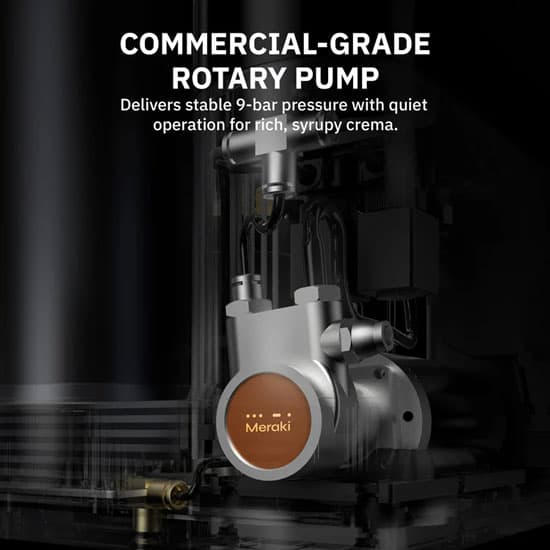
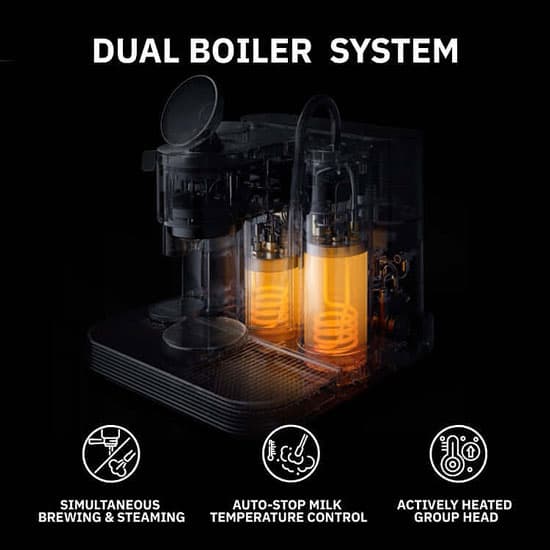
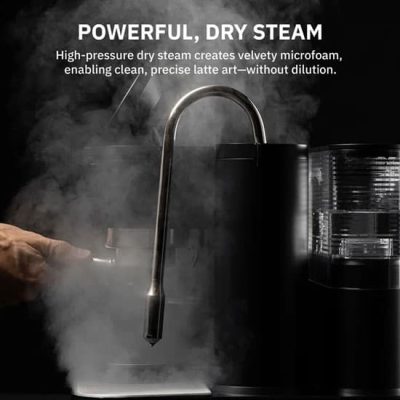
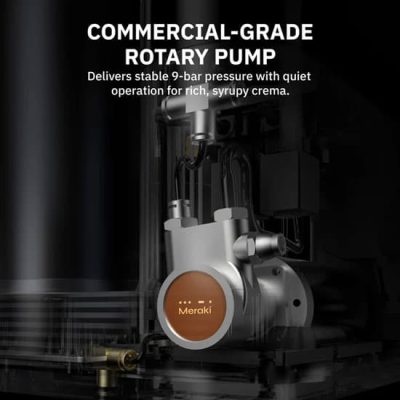
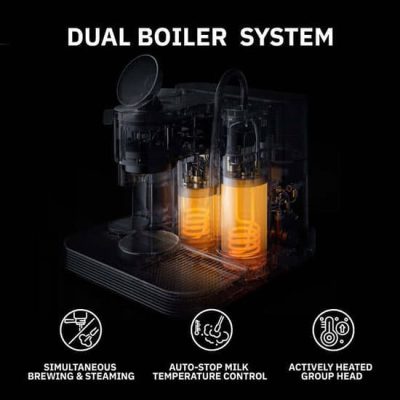
Finally, the rotary pump and dual boiler setup get positive feedback for stability. You can brew and steam without waiting, and pressure stays consistent.
Short Cummings
Some reviewers mention that, while the grinder is capable, it is still fixed inside the machine. You cannot swap it out or upgrade it like you could with a standalone grinder.
Others point out that the system relies heavily on its internal scales. If you prefer manual timing or visual control, the workflow can feel restrictive.
There are also comments about complexity inside a single unit. If one part needs servicing, the whole machine is affected rather than just one component.
Who is it for?
This machine suits the prosumer barista who wants control but does not have space for a full separate setup.
You still work with a proper espresso workflow. You dial in grind size, use a 58 mm portafilter, and manage your recipe. At the same time, the built-in Timemore grinder and dual scales handle the repeatability.
That balance matters. You keep control over grind and extraction, but remove the small errors that come from manual dosing and timing.
It also works well if you make coffee daily but do not want to recalibrate everything each morning. Once set, the machine will hold your recipe steady.
In short, it is for someone who understands espresso and wants consistency, but prefers a tighter, more contained setup.
Features
- Timemore co-engineered conical burr grinder
- Stepless grind adjustment for espresso control
- Dual integrated scales (grind and brew)
- Grind-by-weight dosing
- Brew-by-weight shot control
- Rotary pump with stable 9‑bar pressure
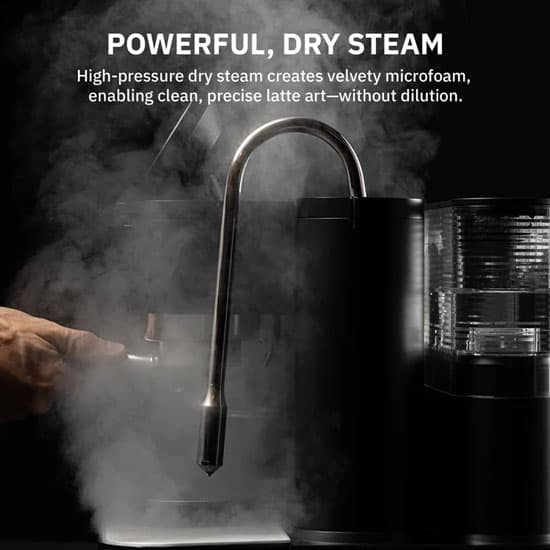
- Dual boiler system for brew and steam
- PID temperature control with real-time feedback
- Dedicated heated group head
- Magnetic dosing cup for cleaner workflow
- 58 mm commercial-size portafilter
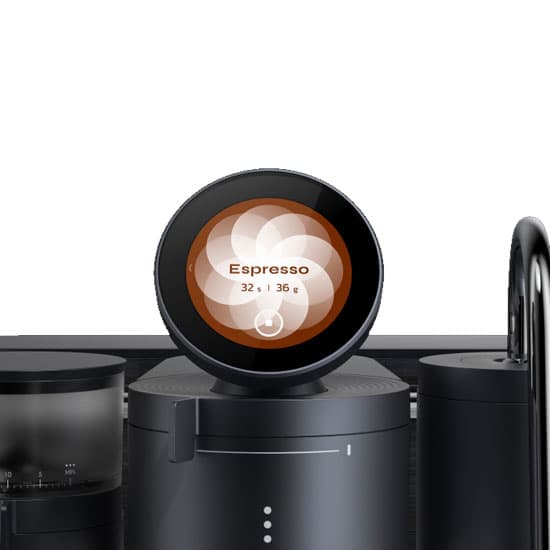
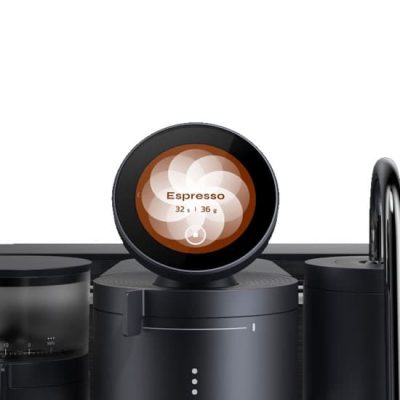
- Touchscreen-guided workflow
- Pre-set and adjustable extraction profiles
Specifications
- Machine type: all-in-one espresso machine with integrated grinder
- Grinder: Timemore co-developed conical burr set
- Grind adjustment: stepless
- Scales: dual integrated (grind and brew), ±0.2 g accuracy
- Boiler system: dual boiler
- Brew boiler: approx. 350 ml
- Steam boiler: approx. 550 ml
- Pump: rotary pump
- Brew pressure: 9 bar
- Water tank capacity: 2 litres
- Drip tray capacity: approx. 650 ml
- Power: 1800 W
- Voltage: 220–240 V
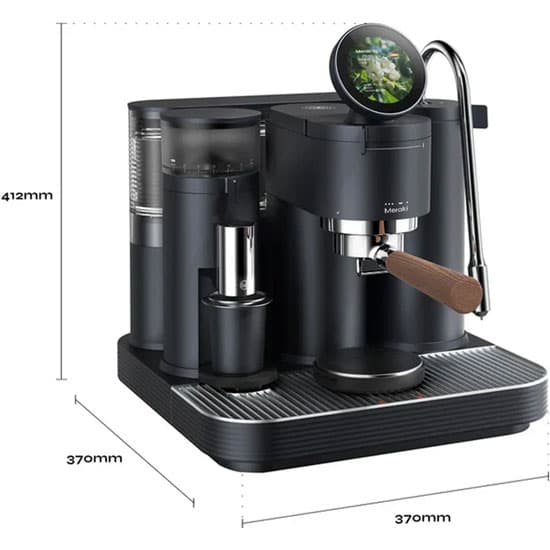
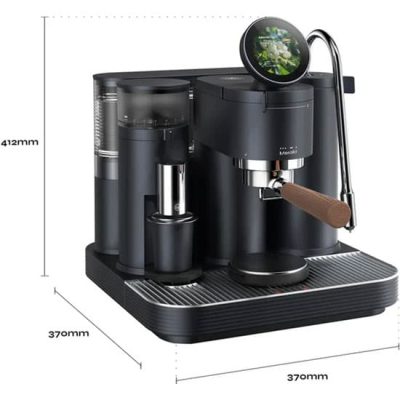
- Dimensions: approx. 370 × 370 × 414 mm
- Weight: approx. 14.3–14.5 kg
- Portafilter size: 58 mm
- Interface: touchscreen display
Sources
• Meraki — primary product details, features, and positioning
• Sprudge — general industry context on automated espresso systems and usability trends

Reviews
There are no reviews yet.