

Mexico
Mexico has produced coffee since the late 18th century, introduced through Veracruz before spreading south into Chiapas and Oaxaca. Today it sits among the world’s larger Arabica producers, though most farms remain small. Production relies heavily on family-owned plots rather than estates.
Genetically, Mexico still grows a wide spread of traditional Arabica cultivars, including Typica and its offshoots, alongside newer disease‑resistant varieties. This mix helps explain the country’s consistent, familiar cup profiles.
Mexican coffees tend to prioritise balance over intensity. Compared with other Latin American origins, acidity usually sits lower and softer. You often see nut, cocoa and gentle sweetness rather than sharp fruit. That profile reflects slower cherry development at altitude, shaded growing, and washed processing focused on clarity.
Farming culture here centres on cooperatives and exporters who aggregate small lots. Many coffees are organic by practice, even when not certified, and drying often happens at home on patios or raised beds.
Chiapas
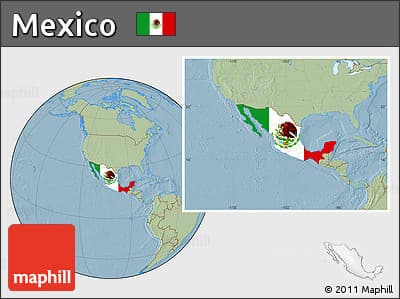
Chiapas is Mexico’s southernmost coffee-growing state, bordering Guatemala. Coffee grows along the Sierra Madre de Chiapas, where steep terrain, cloud cover and shade forests shape the crop.
Altitudes typically range from 1,200 to 1,800 metres. Days stay warm, but nights cool quickly. This temperature shift slows ripening and helps develop structure without pushing acidity too high. Volcanic soils dominate, providing good drainage and steady nutrition.
The cup profile from Chiapas is usually clean and round. You see mild citrus rather than sharp acidity, with chocolate, nuts and light caramel tones. Body sits medium and smooth, making the coffees flexible across brew methods.
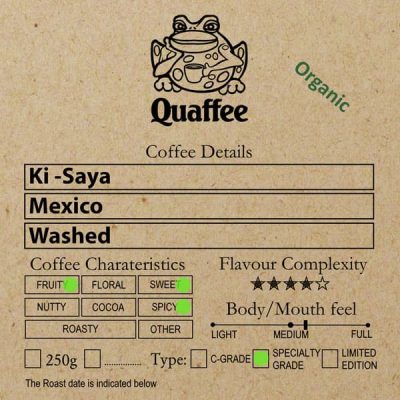
Mexican Ki-Saya
Ki-Saya is an organic washed coffee developed by Covoya and first launched in 2024. It combines lots from various smallholder farmers across Chiapas, selected and profiled at origin to maintain consistency.
The name joins two Mayan words: “Ki”, meaning tasty, and “Saayab”, meaning nature. That reflects both the flavour aim and the organic farming context.
Farmers deliver ripe cherry to local collection points. After processing, the coffee shows a steady profile year to year: balanced sweetness, low to moderate acidity, and a soft, cocoa-led cup.
Processing
- Farmers deliver ripe cherries to local depulping points
- Cherries are depulped shortly after delivery
- Coffee ferments in tanks for 12 to 17 hours
- The coffee is fully washed with clean water
- Parchment dries on small patios next to farmers’ homes
- Drying continues until moisture reaches stable export levels
Details of this coffee
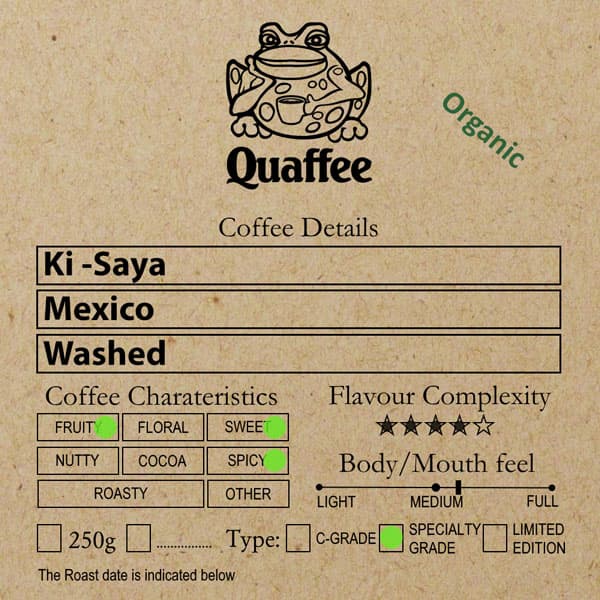
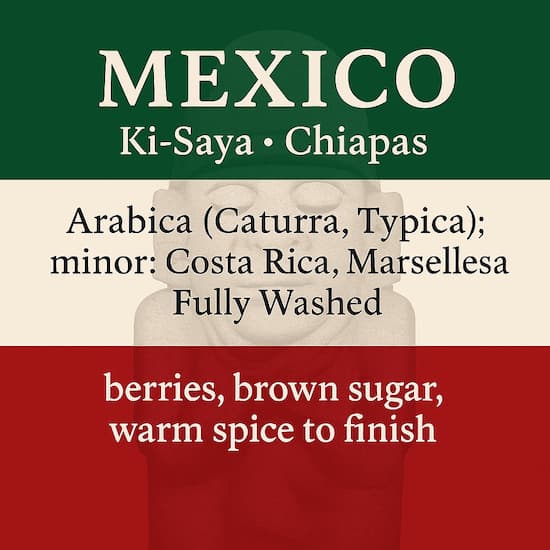
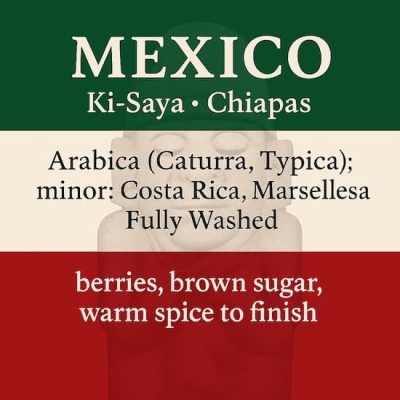
For our roast, we found the cocoa notes were not that distinct and rather found berries, brown sugar, and warm spice to finish. The coffee has a medium+ body. Tasty by nature.
| Region | Chiapas, Mexico |
| Farmers | Various smallholder farmers |
| Cultivars | Arabica (Caturra, Typica); minor — Costa Rica, Marsellesa |
| Altitude | 1,200–1,800 masl |
| Processing | Berries, brown sugar, and warm spice to finish. Medium+ Body |
| Packaging | GrainPro |
| Characteristics | Berries, brown sugar, warm spice to finish. Medium+ Body |
| Profile used | Gentle ramp through the roast, with an extended development through lower flame control |
| Roast Degree | Light |
Our brews:
| Brew Method | Ratio | Brew Method | Ratio | |
|---|---|---|---|---|
| Espresso | 1:2.3 (26 sec) | AeroPress | 17.5g:200g (finer) | |
| Plunger | 48g:800g | Pour over/filter | 18g:300g (50 sec bloom, 3.3 total brewing time) |
Transparency Information
| Producer / Organisation | Covoya |
|---|---|
| FOB price | $4.436 |
| Cupping score | 83 (Zuka) |
| Lot size bought | 1 x 69kg bag. |
| Relationship | We have been purchasing coffee from Zuka Green since their inception |
Sources
- Covoya — producer information and Ki‑Saya programme details
- Trees Coffee — Chiapas region geography and cup profile context
- Zuka Product Sheet.

Reviews
There are no reviews yet.