


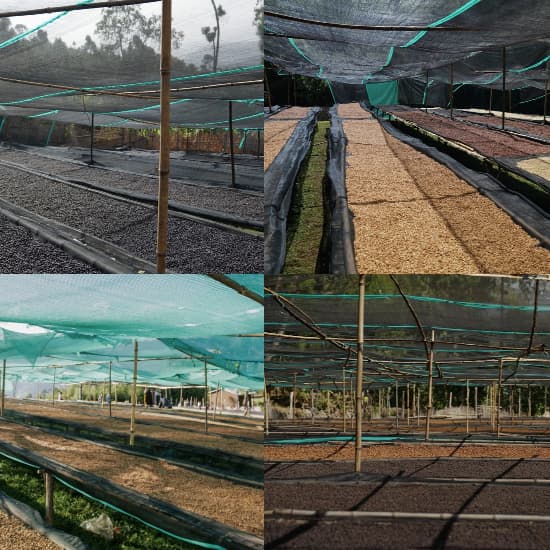
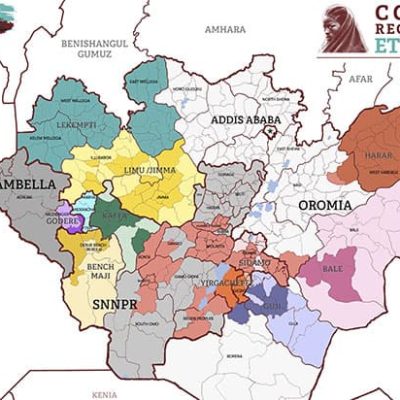
A high-altitude natural Ethiopian coffee from Sidama, produced through the Alo Coffee network. Once we tasted it we knew we had to have this coffee to help celebrate 2 decades in coffee.
Ethiopia
Ethiopia is widely recognised as the birthplace of Arabica coffee. The wild coffee forests of western and southern Ethiopia hold the genetic foundation from which Arabica coffee spread around the world. As a result, Ethiopia remains one of the most important countries in coffee both historically and genetically.
Coffee farming supports millions of Ethiopians and forms part of daily life across the country. Unlike many coffee-producing nations that rely heavily on large estates, much of Ethiopia’s coffee comes from smallholder farmers working small plots of land. Coffee is not simply an export crop. It is part of local culture, family life and community traditions.
Ethiopia also stands apart because of its extraordinary genetic diversity. Hundreds of local heirloom varieties grow across the country’s coffee regions, creating a wide range of flavour profiles. Consequently, Ethiopian coffees often show more floral, citrus, tea-like and fruit-driven characteristics than coffees from many other origins. These flavours, combined with high elevations and traditional farming methods, have helped establish Ethiopia as a benchmark for specialty coffee.
Sidama
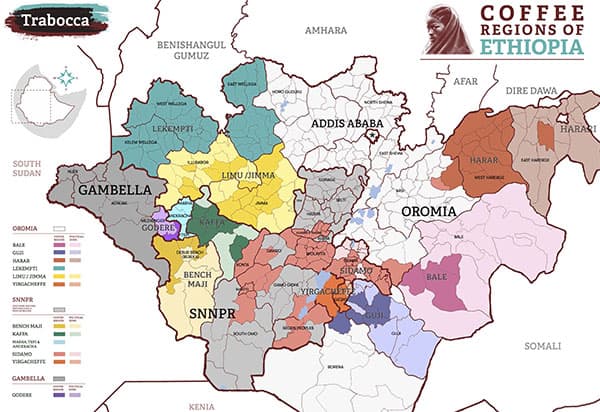
Sidama sits in southern Ethiopia and is one of the country’s most respected coffee-growing regions, and probably their oldest commercially viable coffee growing area. The area consists of high mountains, steep valleys and densely farmed hillsides. Coffee grows at elevations that regularly exceed 2,000 metres above sea level, with some farms reaching considerably higher.
The region receives reliable rainfall and benefits from cool temperatures throughout the growing season. Cherries mature slowly under these conditions, allowing sugars and organic acids to develop over a longer period. This slower maturation contributes to greater flavour clarity and complexity in the cup.
Much of the coffee grows in fertile red soils beneath shade trees. Farmers typically cultivate coffee alongside other crops using traditional methods passed down through generations.
Sidama coffees are known for their bright citrus acidity, floral aromas and pronounced fruit character. Depending on the process, the cup can show anything from citrus and stone fruit to berries and tropical fruit. Even so, the region often maintains a clean structure and elegant sweetness that distinguishes it from many other Ethiopian origins.
Alo Coffee Dume Shade
This coffee comes through the Alo Coffee network led by producer Tamiru Tadesse in Sidama. Alo Coffee operates several processing stations across Bensa, Bona and neighbouring areas, working closely with local smallholder farmers to separate and showcase exceptional lots from specific communities.
The Dume Shade lot comes from exceptionally high elevations between approximately 2,400 and 2,550 metres above sea level. At these altitudes, cool temperatures slow cherry development, creating the conditions for concentrated sweetness, vibrant acidity and complex aromatics.
The coffee is built around Ethiopian heirloom genetics, primarily the JARC-developed cultivar 74158. Farmers selectively harvest ripe cherries, which are then processed using the natural method. The cherries are dried whole on shaded raised African beds, allowing fruit sugars to interact with the seed throughout drying and contribute to the coffee’s distinctive character.
In the cup, this coffee delivers a vivid fruit profile. We found lime, melon, apricot and blueberry up front, followed by caramelised brown sugar sweetness and a finish of vanilla. The result is a coffee with bright acidity, layered fruit notes and a juicy, expressive character.
For filter brewing, use the coffee as fresh as possible to experience its full fruit expression. For espresso, allow approximately four days after roasting before brewing. This provides time for the coffee to settle while preserving its vibrant fruit character.
Details of this coffee
| Region | Sidama, Ethiopia |
| Farmers | Various smallholder farmers. Approximately 60 farmers directly connected to the Alo Washing Station and hundreds more across associated stations |
| Cultivars | Arabica (Land race / Heirloom) |
| Altitude | 2,400 to 2,550 masl |
| Processing | Natural shade from on African Raised bed for 48 days. |
| Packaging | Vaccume Pack 30kg lot |
| Characteristics | Explodes with fruit flavours we picked up lime, melon, apricot, blueberries and caramelised brown sugar with a finish of vanilla. For Pour over drink as close to roast date to get all the fruitiness – brown sugar and vanilla develop as the coffee ages. |
| Profile used | Gentle ramp through the roast, with an accelerated development through medium flame control |
| Roast Degree | Light |
Our brews:
| Brew Method | Ratio | Brew Method | Ratio | |
|---|---|---|---|---|
| Espresso | 1:2.3 (29 sec) – after 4 days acidity is more balanced. After 14 days more spice so decrease extraction time. | AeroPress | 17.5g:200g (coarser) | |
| Plunger | 48g:800g | Pour over/filter | 18g:300g (50 sec bloom, 3.3 total brewing time, brew close to roast date for more fruit and later for more caramel and spice) |
Transparency Information
| Producer / Organisation | Alo Coffee |
|---|---|
| FOB price | $24 |
| Cupping score | 88 (Alo coffee) |
| Lot size bought | 1 x 30 kg vac bag. |
| Relationship | Our first coffee from Alo Coffee. We co-sourced this with Cedar who we have a relationship with since their inception. |
Sources
- Alo Coffee – Used for Sidama regional information, Alo Coffee operations, farmer network and cultivar information.
- Oaks Coffee Co – Used for producer details, altitude, processing information and coffee-specific background.
- Alo’s Instagram – Used alongside supplied tasting notes and coffee-specific information.


Reviews
There are no reviews yet.